Qinyang Guorui paper making Machinery Co., LTD
  • HOME
  • About
  • Product
  • Case
  • Cooperation and exchange
  • News
  • Contact US
CN
EN
  • HOME
  • About
  • Product
  • Case
  • Cooperation and exchange
  • News
  • Contact US

News
HOME > News
Development of Headbox Technology(一)

Development of Headbox Technology(一)

Release time:2026-03-24
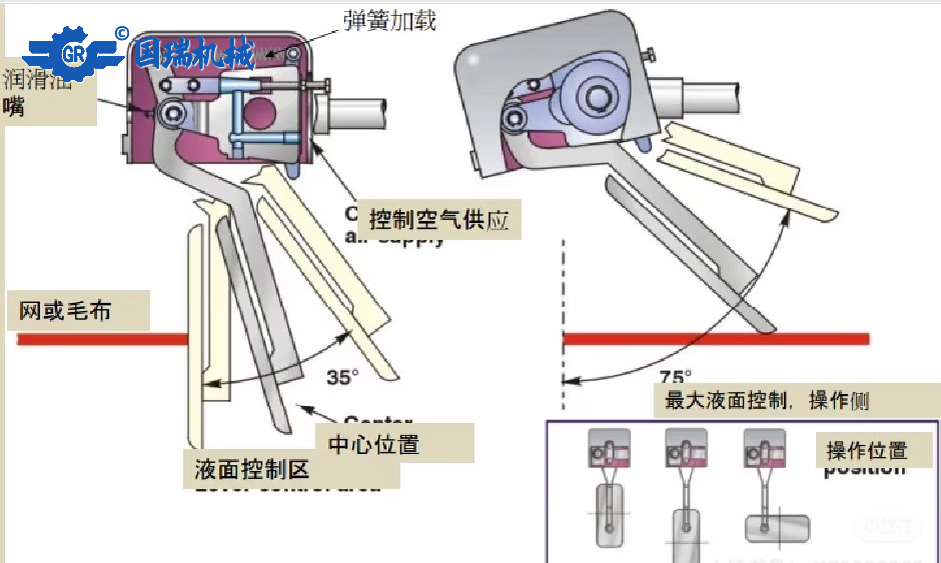
In paper production, the headbox is one of the most critical pieces of equipment that determines the quality of the paper’s fiber structure. It is responsible for achieving uniformity and controllability of paper properties. It directly affects the paper’s MD/CD strength ratio, tensile or breaking length, porosity, formation, and retention. The future development goals of papermaking — including continuous improvements in machine speed, efficiency, and paper quality — impose a series of requirements for the upgrading of existing headboxes. The operating performance of a headbox is closely related to paper machine speed and efficiency. At the same time, improvements in headbox performance should also be considered in combination with the quality of the paper’s fiber structure (uniformity of basis weight distribution and fiber orientation). Higher demands must also be placed on mechanical manufacturing under high-speed conditions. The development of headboxes has been driven by the continuous increase in paper
View details
How to Maintain the Good Operation of the Vacuum Press Roll (二)

How to Maintain the Good Operation of the Vacuum Press Roll (二)

Release time:2026-03-09
To solve the problem of shell hole blockage, it is first necessary to clarify the composition and source of the blockage.The grooves and small holes on the surface of the vacuum press roll are used to generate negative pressure during the pressing process, helping dewater the paper web and keep it close to the felt.However, during paper machine operation, fine fibers, fillers (such as calcium carbonate and talcum powder), and sizing agents (such as starch and latex) in the pulp may enter the holes and gradually accumulate over time, resulting in blockage.Such blockage reduces the vacuum effect, lowers dewatering efficiency, and even causes paper quality defects or web breaks.The blockage consists of both organic and inorganic substances. To maintain the good working condition of the vacuum press roll, routine cleaning of the paper machine is generally performed every 7–10 days, especially for black paper production.During cleaning, acidic and alkaline chemicals are sprayed onto the felt, and organic and
View details
How to Maintain Stable Operation of the Vacuum Press Roll(一)

How to Maintain Stable Operation of the Vacuum Press Roll(一)

Release time:2026-02-25
Four-roll triple-nip is a commonly used structure in the press section of modern high-speed paper machines, consisting of four press rolls forming three nips. The paper web passes through three consecutive nips to achieve progressive dewatering. The core of the four-roll triple-nip configuration is to use a vacuum press roll to improve dewatering efficiency. Firstly, vacuum suction is applied in the first nip to extract moisture from the interior of the paper web. The web then successively passes through the second and third nips for further mechanical dewatering via roll compression. The main advantages of four-roll triple-nip paper machines are their ability to produce lower-basis-weight paper while operating at high speeds. The shell of a vacuum press roll is drilled with evenly distributed holes or grooves, connected internally to a vacuum system. As the paper web passes through the press nip, the vacuum system inside the roll creates negative pressure, quickly removing moisture from the web and keeping t
View details
Headbox

Headbox

Release time:2026-02-02
The headbox is a core component of the paper machine, which achieves uniform distribution and precise ejection of pulp through the synergistic effect of three parts: the pulp distributor, the weir tank and the slice. Its structure includes components such as a turbulence generator and a dilution water device, which can adjust the pulp flow rate, pressure and fiber dispersion, and directly affect the basis weight distribution and strength properties of paper. It is mainly divided into three types: open type, air-cushion type and hydraulic type.
View details
Guorui Machinery:Pulping Process Flow

Guorui Machinery:Pulping Process Flow

Release time:2026-01-21
There are three pulping methods in the pulping process flow: chemical pulping, mechanical pulping, and high-temperature and high-pressure pulping technology. High-temperature and High-pressure Pulping Technology (CTMP)High-temperature and high-pressure pulping technology (CTMP) is an efficient mechanical pulping process. Through the combined action of high temperature, high pressure and chemicals, wood is crushed into fibers, which are then mixed with chemicals to make them suitable for the papermaking industry. The CTMP process flow includes steps such as log pretreatment, cutting, crushing and mixing. Characterized by high efficiency and environmental friendliness, the CTMP process can produce fiberboards with uniform texture and a small amount of wood chips, significantly improving the surface quality and mechanical properties of paper. Chemical PulpingChemical pulping achieves the separation of cellulose from non-cellulosic components such as lignin in wood by using chemical agents, thereby obtaining pure
View details
  • «
  • 1
  • 2
  • 3
  • 4
  • »
  • +86 138 3914 4000
  • Qinyang Guorui paper making Machinery Co., LTD微信客服
  • Qinyang Guorui paper making Machinery Co., LTD微信客服
  • a13839144000@foxmail.com
Qinyang Guorui paper making Machinery Co., LTD
Follow us
  • About
  • Product
  • Case
  • Cooperation and exchange
  • News
  • Contact US
  • : Baixiang Industrial zone, Qinyang City, Henan, China
  • :+86 138 3914 4000
  • :+86 135 2336 6062
  • : +86 391 5936 188
  • : a13839144000@foxmail.com
  • © 2024 Qinyang Guorui paper making Machinery Co., LTD