Four-roll triple-nip is a commonly used structure in the press section of modern high-speed paper machines, consisting of four press rolls forming three nips. The paper web passes through three consecutive nips to achieve progressive dewatering. The core of the four-roll triple-nip configuration is to use a vacuum press roll to improve dewatering efficiency. Firstly, vacuum suction is applied in the first nip to extract moisture from the interior of the paper web. The web then successively passes through the second and third nips for further mechanical dewatering via roll compression. The main advantages of four-roll triple-nip paper machines are their ability to produce lower-basis-weight paper while operating at high speeds.
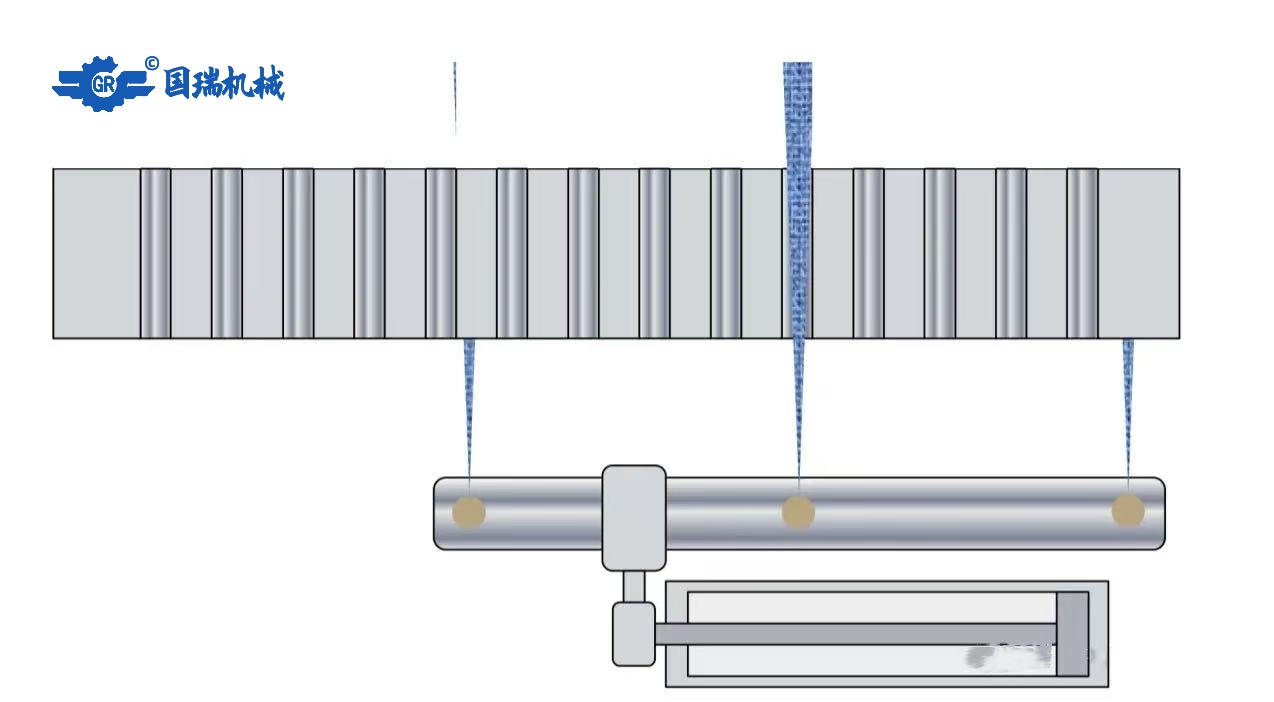
The shell of a vacuum press roll is drilled with evenly distributed holes or grooves, connected internally to a vacuum system. As the paper web passes through the press nip, the vacuum system inside the roll creates negative pressure, quickly removing moisture from the web and keeping the sheet firmly attached to the press felt. This effectively improves dewatering efficiency and increases the dryness of the paper web. As the only component in the four-roll triple-nip system equipped with vacuum and passing through two nips, the operating condition of the vacuum press roll plays a critical role in the stable operation of the entire press section.
Criteria for Good Operating Condition of the Vacuum Press RollA vacuum press roll in good condition should meet the following requirements:
Vacuum level in the suction zone reaches the set value;
Internal wear-resistant seals are intact;
Lubrication and spray water system is unobstructed;
No clogging in the holes of the vacuum roll shell.
Meanwhile, no abnormalities such as wrinkling, edge picking or bubbling should occur on the paper web in the suction zone.There are two main factors affecting the performance of the vacuum press roll:
Wear of the wear strips caused by clogged lubrication water, resulting in local vacuum leakage;
Blockage of the vacuum holes in the roll shell, leading to local vacuum loss.
Solutions to Clogged Lubrication Water and Wear Strip AbrasionTo solve wear strip abrasion caused by clogged lubrication water, the following measures can be adopted:
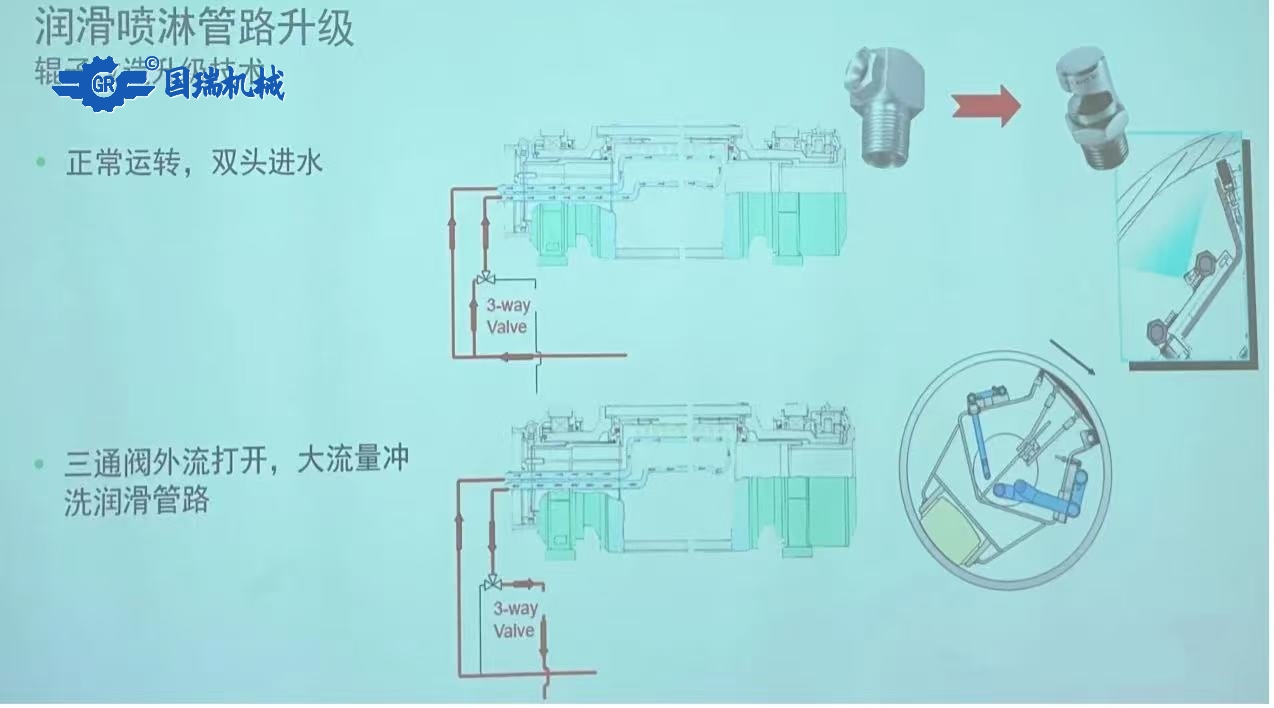
Improve lubrication water quality: Use filtered or softened water, and install an online flushing device for the lubrication water system. Modify one end of the original dual-end water supply pipeline with a timed automatic three-way valve to realize timed automatic flushing of the nozzles. During automatic flushing, the three-way valve switches the flow from water inlet to drainage, and pressurized one-way flow removes residual foreign matter in the pipeline, ensuring unobstructed nozzles.
Change the sealing type: Replace traditional contact seals with non-contact seals. This modification significantly reduces wear strip abrasion caused by lubrication water clogging. Typically, the wear strips of the press roll do not need replacement within 2–3 years.