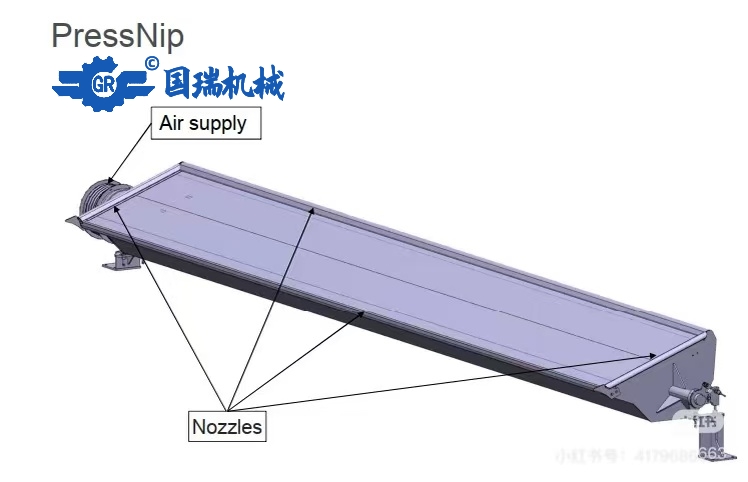
The following items affect the function of the stabilizing box:
Air flow of the stabilizing box: After installation and adjustment, check whether the fan belt is properly tensioned, whether the air flow valve is set to the correct position, and whether the heater is clean.
Position of the stabilizing box: Adjust the stabilizing box position according to drawings before startup. Mark this position for reference, so re-adjustment is unnecessary when replacing the dry fabric.
Cleaning of the stabilizing box: Especially the air outlet slots. Clean it once a month for optimal performance. Test the negative pressure gauge every month and keep records for data comparison.
Air temperature: If moisture or dripping water appears on the surface of the stabilizing box, measure the temperature of the outlet air. Normally the air temperature shall be around 70–80°C. Condensation easily occurs below this temperature. Increase steam supply to raise the air temperature in such cases.
Position of the stabilizing box: Locate the stabilizing box as close as possible to the lower dryer cylinder of the dry fabric to stabilize the web. The minimum clearance between the stabilizing box and dry fabric is about 15–20 mm, and the gap between the stabilizing box and lower dryer cylinder is about 10–15 mm.
As paper machine operating speed keeps increasing, requirements for the lower row of dryer cylinders become more stringent for single-tier dryer fabric configurations. Vacuum rolls are adopted for the lower dryer cylinders. Negative pressure is generated around the vacuum roll to attach the paper web tightly to the dry fabric, preventing web flutter and other stability issues. The surface of the VAC vacuum roll is grooved, with drilled holes inside the grooves. An axial fan extracts air inside the roll to build negative pressure in the grooves and holes. With vacuum rolls and stabilizing boxes installed, the paper web runs fully attached to the dry fabric and vacuum roll, enabling stable high-speed operation of the dryer section.
Paper fluff and contaminants easily clog the small holes on the VAC roll. Clogged holes weaken negative pressure inside grooves, which will trigger serious operational troubles at the vacuum roll zone or the draw section between this roll and the next dryer cylinder. Blockage on the drive side also makes threading difficult. Therefore, regular cleaning of grooves and holes is critical. High-pressure water, compressed air or steam can be used for cleaning; compressed air is the preferred method.
There are two main cleaning methods for the vacuum roll shell without removing the dry fabric:
Under crawling speed, use dedicated tools connected with compressed air or steam to manually clean the holes of the vacuum roll.
Install a reciprocating compressed air pipe on the stabilizing box. Turn on compressed air during paper machine running or crawling mode. Similar to high-pressure water nozzles, strong compressed air blasts purge the grooves and holes of the vacuum roll. This option requires higher upfront investment, yet it saves labor and delivers the best cleaning effect.