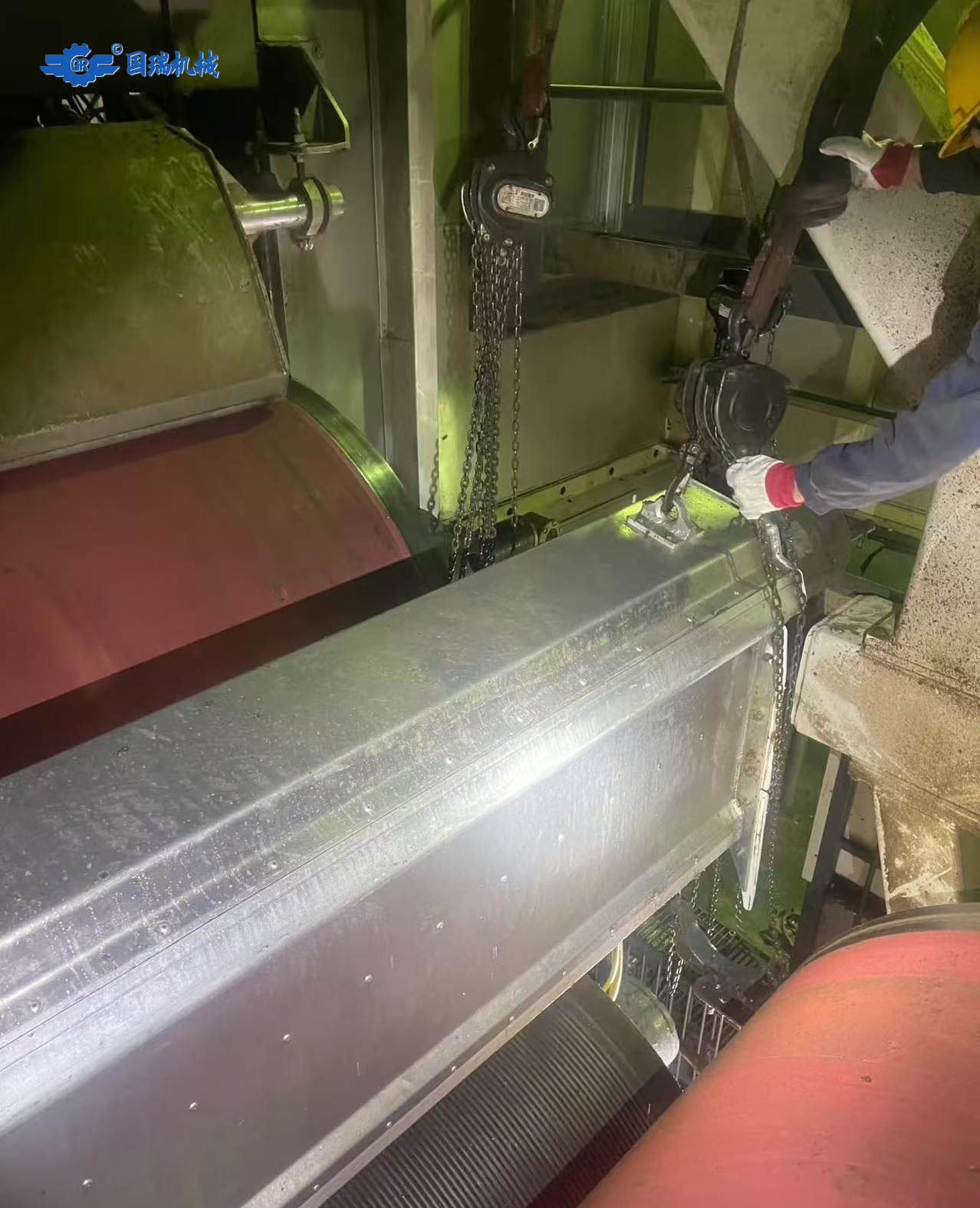
As the operating speed of modern paper machines continues to rise, runnability has become a critical factor for modern paper machines. In the press section and dryer section, maintaining intimate contact between the paper web and felts / dryer fabrics ensures trouble‑free, stable operation of the paper sheet at high speed, high efficiency and superior quality.
Conventional paper machines adopt two‑tier dryer groups in the dryer section, with open draws between dryer cylinders. The paper web tends to flutter even at relatively low speeds, frequently causing web breaks — a typical drawback of two‑tier dryer configurations. Modern paper machines generally switch to single‑row dryers or a combined single‑row plus two‑row dryer layout. Nevertheless, even with single‑row dryers at high operating speeds, moving air currents can form blisters or wrinkles on the web, destabilizing web travel and greatly increasing the risk of web breaks and sheet defects.
To hold the paper web tightly against the fabric, a negative‑pressure zone must be created over the entire span of the web passing between dryers. Negative pressure keeps the web adhered to the fabric. The optimal method to generate negative pressure is to discharge air from the stabilizer box through specially designed nozzles. The ejected airflow entrains surrounding air and creates a steady vacuum. A key advantage is that the fabric does not come into direct contact with the stabilizer box. It is only necessary to supply sufficient air to the stabilizer box for vacuum generation and ensure uniform, balanced air distribution across the machine width.
A long open draw exists where the paper web transfers from the press section to the dryer section. The wet sheet is prone to fluttering under airflow in this open zone. This problem was traditionally addressed by increasing speed differentials, yet this practice often triggers web breaks.
The primary function of a stabilizer box installed between the press and dryer sections is to support the wet web spanning this transfer zone. In design, dryer fabric guide rolls are positioned closer to the press outlet to shorten the open draw. Assisted by the stabilizer box, the sheet reliably adheres to the underside of the dryer fabric before entering the dryers. This eliminates web flutter, reduces breaks and permits higher machine speed. Since the lead strip for threading stays tight against the dryer fabric, threading becomes faster and simpler. Faster threading and fewer breaks jointly boost overall paper machine efficiency.
For press‑to‑dryer stabilizer boxes, the design goal is to minimize the length of the open draw. Air for the stabilizer box can be heated by heaters or sourced from hot air recovered via front‑dry heat exchangers. Hot air is blown out through slots on the stabilizer box; the airflow velocity evacuates air trapped between the box and dryer fabric. The resulting pressure differential pulls the web firmly against the underside of the dryer fabric and resolves web flutter. The minimum air temperature is normally around 70°C. At lower temperatures, moisture condensation inside the stabilizer box may cause water dripping.