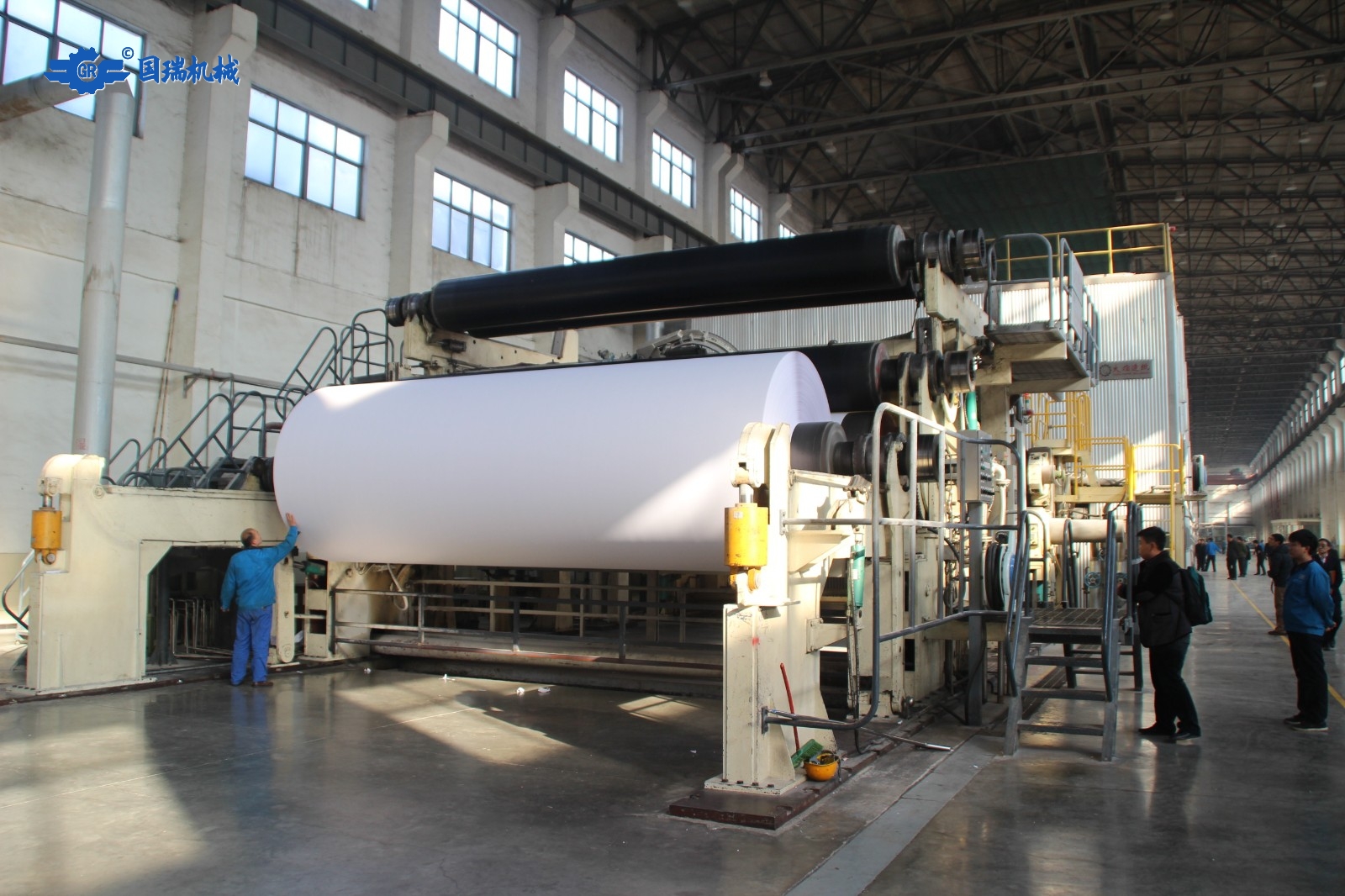
Modern papermaking is one of the four great inventions of China. With the continuous progress and development of science and technology, papermaking technology has been constantly upgraded and gradually moved towards scientific and modernization. How do modern paper mills produce paper? What is the papermaking process? The modern papermaking process can be mainly divided into the following steps: raw materials - cooking - washing - pulping - blending - papermaking - paper storage.
1. Raw materials: The raw materials for papermaking are mainly waste paper, wood, rice straw, bagasse, bamboo, etc.
2. Cooking: Cooking refers to the process of steaming the raw materials under certain pressure, temperature and humidity for one hour, allowing the chemical solution to fully penetrate the raw materials and decompose them. (In pressure vessels, cooking assistants and chelating agents are generally added to reduce the cooking time).
3. Washing: It involves washing the pulp with water, constantly repeating the cycle of water absorption and dehydration until only fibers remain. The washing section is also known as the washing, screening and bleaching section: washing means water washing; screening is the selection of grades based on the length of fibers after water washing using a grading screen; bleaching is the use of various bleaching agents to bleach the graded pulp. (Bleaching assistants include oxidative bleaching assistants such as oxygen, chlorine gas, hydrogen peroxide, etc., and reductive bleaching assistants such as sodium carbonate and thiourea dioxide).
4. Beating: After washing, the pulp forms lumps and is irregular. In the beating section, through kneading, rubbing and fibrillation, the pulp is beaten into a free suspension liquid as required by the standard.
5. Pulp blending: The blending of paper materials during the pulp blending process is another key point in papermaking. The strength, color, printability and storage life of the finished paper are directly related to it. Therefore, there is a saying in the papermaking industry that 70% of the work is in pulp making and 30% in papermaking.
Generally, 3 to 5 kinds of pulp are used and mixed according to the requirements of different types of paper.
6. Papermaking: The main task of the papermaking section is to evenly interweave and dehydrate the thin paper pulp, followed by drying and calendering. The wet end of the papermaking section is responsible for the formation of the paper sheet. During the paper sheet formation process, retention aids, drainage aids, defoamers, etc. are added. Among them, the purpose of retention aids is to promote the retention of fillers (such as talc, kaolin, calcium carbonate, etc.). (In the papermaking pool between the pulp mixing and the wet end, if there are special requirements, color dyes, color fixatives, fluorescent agents, anhydrous aluminum sulfate, fluorescent brighteners, etc. can be added. If white paper is being made and the whiteness value needs to be increased, purple, blue or violet colors can be added.) After the wet end is the press section in the dry end, where about 60% of the water is removed from the pulp. The dehydrated pulp then enters the drying section, where oxidized starch, cationic starch, etc. are added. Then it enters the sizing section, where surface sizing agents, amylases, dry strength agents, wet strength agents, starch strengthening agents, and other chemicals are added as needed.
7. Paper storage: The paper needs to be rewound, cut, packed, and stored in the warehouse.